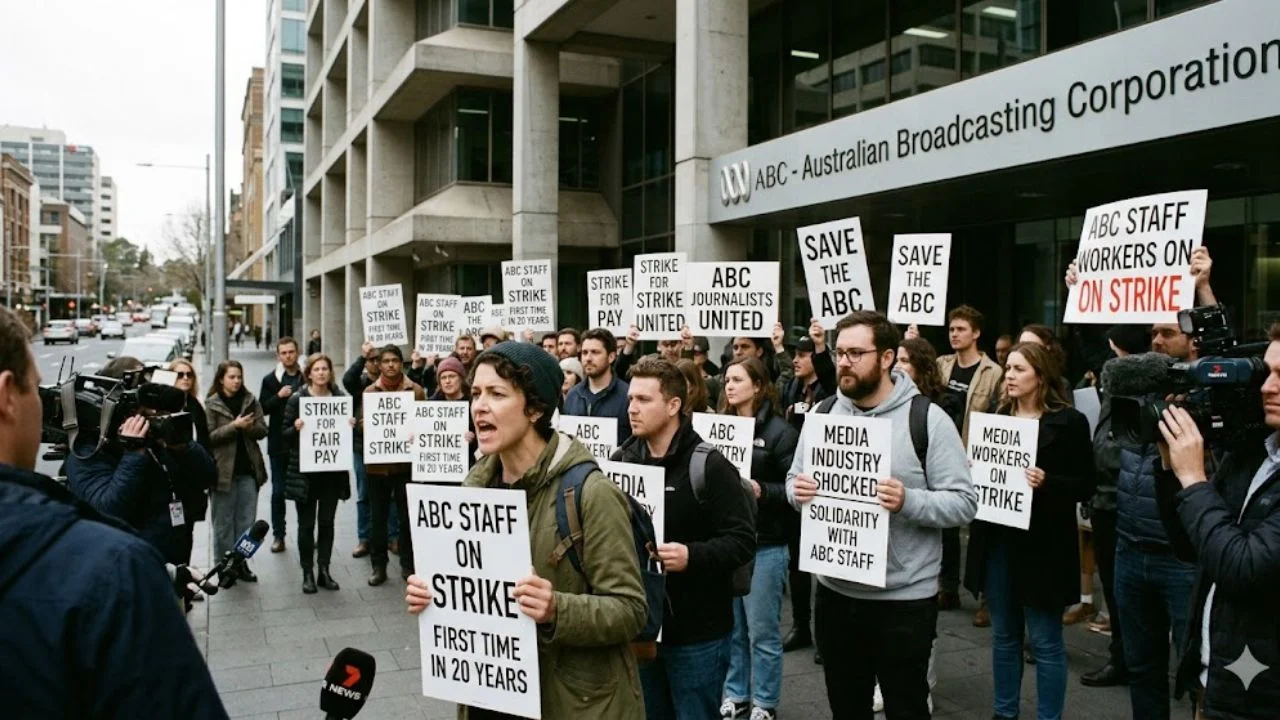
Australia Staff Strike: For the first time in nearly two decades, employees at the Australian Broadcasting Corporation took part in a major strike, sending a strong message across the country. Journalists, producers, technical teams, and support staff walked off the job for 24 hours. This action was not just about workplace concerns but also about the future of journalism in Australia. The strike quickly became a national topic of discussion, highlighting serious issues like wages, job security, and the growing role of technology in newsrooms.
The strike showed how important the national broadcaster is to everyday Australians. Many people rely on it for trusted news, especially during emergencies and major events. When such a large group of media workers stops working, it becomes clear how much effort goes into delivering news every day. This event has made people think more deeply about the condition of the media industry.
Why ABC Employees Decided to Strike
The decision to strike did not happen suddenly but was the result of ongoing frustration among employees. Workers rejected a proposed enterprise agreement that they felt did not reflect the reality of rising living costs. The agreement included a one-time payment of $1,000, but staff believed this was not enough to deal with inflation and long-term financial pressure.
यह भी पढ़े:
 Nokia 1100 5G Phone – 200MP Camera, 7000mAh Battery, 18GB RAM & 120Hz AMOLED Display at ₹10,999!
Many employees felt that the proposed deal ignored the challenges they face daily. Rising expenses, heavier workloads, and uncertain job conditions have made it harder for workers to feel secure. Because of this, a large number of employees voted against the agreement. Their rejection showed that they wanted a more fair and realistic solution rather than a short-term fix.
Role of Unions in Organizing the Strike
The strike was supported and organized by unions such as the Media, Entertainment and Arts Alliance and the Community and Public Sector Union. These unions represent many workers in the media and public sectors. They played an important role in coordinating the strike and ensuring that employees’ voices were heard.
Unions have been actively involved in negotiations with management, trying to reach an agreement that satisfies both sides. They have also emphasized the need for better working conditions and fair pay. Their involvement highlights the importance of collective action when workers feel that their concerns are not being addressed properly.
यह भी पढ़े:
 Universal Credit and Pension Payment Dates for April 2026 + Cost of Living Support Explained
Impact on News and Daily Programming
The strike had a direct impact on news and current affairs programs. Since key staff like producers, camera operators, and editors were not working, several live shows could not go on air. Some programs were replaced with pre-recorded content, while others were cancelled completely. This created noticeable gaps in daily news coverage.
The timing of the strike was also important, as it was planned during peak news hours. This made the impact even more visible to the public. Many viewers realized how much effort goes into producing live broadcasts. The disruption also showed how dependent the country is on the national broadcaster for real-time information.
Ensuring Essential Services Continue
Even during the strike, certain essential services were maintained. Emergency broadcasting, such as updates during natural disasters or public safety alerts, continued as usual. This decision ensured that the public remained safe and informed during critical situations. It also showed that employees understand their responsibility to the community.

Balancing protest with public duty was an important part of the strike. Workers wanted to send a message without putting people at risk. This approach helped maintain public trust while still highlighting serious workplace issues. It also showed that employees care deeply about their role in society.
Long-Term Issues Behind Staff Frustration
The strike is part of a larger story about changes within the organisation over many years. Staff numbers have reduced significantly, with around 1,700 jobs lost over the past decade. At the same time, the demand for faster and more digital news coverage has increased. This has placed extra pressure on the remaining employees.
Workers are now expected to produce more content with fewer resources. The shift to 24/7 digital news has increased workloads and stress levels. Many employees feel that their efforts are not matched by fair compensation. This growing imbalance has contributed to dissatisfaction and eventually led to the strike.
Financial Concerns and Wage Issues
One of the main concerns for employees is that wage increases are not keeping up with inflation. While the proposed agreement included gradual pay rises, staff argued that these increases were too small. When the cost of living rises faster than wages, people effectively earn less in real terms.
This situation is especially challenging in major cities where housing and daily expenses are high. Employees feel that their financial stability is being affected over time. This is why many workers viewed the proposed deal as unfair and chose to reject it. They are asking for a solution that matches current economic realities.
Concerns About AI and Job Security
Another major issue raised during the strike is the role of artificial intelligence in journalism. Employees are not completely against new technology, but they want clear guidelines on how it should be used. There is concern that AI could replace important editorial roles or reduce the need for human journalists.
Workers believe that journalism requires human judgment, ethics, and experience. They argue that technology should support journalists, not replace them. There are also concerns about trust, as audiences expect news to be accurate and responsibly reported. These discussions show that the strike is not only about pay but also about the future of the profession.
What This Means for Australia’s Media Industry
The impact of this strike goes beyond a single organisation. It has raised questions about the future of the entire media industry in Australia. Many media companies are already facing challenges such as job cuts and reduced funding. The strike highlights the need to protect quality journalism in a rapidly changing environment.
If experienced professionals leave the industry, it could affect the quality of news reporting. Regional areas, which depend heavily on public broadcasting, may be the most affected. This situation has made people think about how important it is to invest in strong and independent media organisations.
Conclusion
The strike at the Australian Broadcasting Corporation is a significant moment in Australia’s media history. It reflects deeper issues related to pay, job security, and the changing nature of journalism. While the immediate disruption has affected news services, it has also started an important conversation about the future.
The outcome of this situation will likely influence how media organisations operate in the coming years. It will also shape how technology, funding, and workforce conditions are managed. For now, the strike stands as a reminder of the challenges faced by those who work to keep the public informed.
Disclaimer
This article is for informational purposes only and is based on publicly available details about the ABC strike in 2026. The situation may evolve as negotiations continue between employees and management. Readers are encouraged to follow official updates and verified news sources for the latest developments.